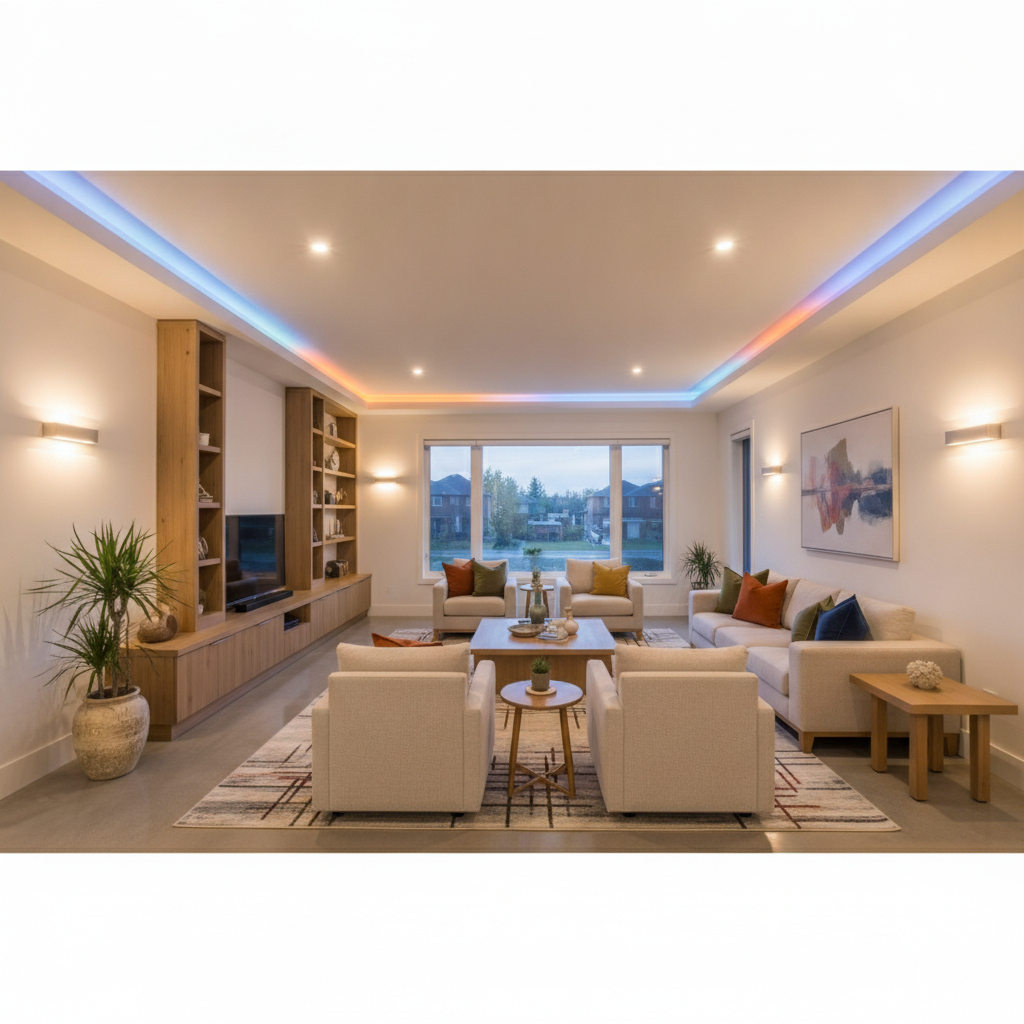
Smart light solutions are integrated lighting systems that combine LED fixtures, smart dimmers, sensors, and unified controls to automate brightness, color, and schedules. They save energy, boost comfort, and improve safety. In Brampton homes, SmartAura designs lighting that unifies rooms and outdoor spaces under one-touch control on a single, reliable platform.
By SmartAura • Last updated: July 1, 2026
Summary
This complete guide to smart light solutions explains essentials and shows how to plan, install, and live with them. Learn what smart lighting is, why it matters in 2026, how it works, the main device types, best practices, recommended tools, mini case studies, and a step-by-step path to launch in Brampton.
Use this as a practical, hands-on playbook built from SmartAura’s real GTA projects. Inside, you’ll find:
- Plain-English definition of smart lighting and its building blocks
- Energy, wellness, and security benefits you’ll notice in week one
- How sensors, dimmers, hubs, and Matter make control effortless
- Room-by-room approaches and outdoor/landscape strategies
- Design best practices we apply across Greater Toronto homes
- Tools, platforms, and why networking reliability matters
- Mini case studies from Brampton and nearby cities
Contents
- What Are Smart Light Solutions?
- Why Smart Lighting Matters in 2026
- How Smart Lighting Works
- Types of Smart Light Solutions
- Smart Lighting Design Best Practices
- Tools, Platforms, and Integration
- Switches vs Bulbs vs Strips vs Fixtures
- Step-by-Step: Implementing with SmartAura
- Mini Case Studies
- Smart Lighting FAQ
- Wrap-Up + Key Takeaways
What Are Smart Light Solutions?
Smart light solutions are connected LED systems controlled by apps, voice, sensors, and schedules. They automate brightness, color temperature, and scenes, and integrate with shades and security. The payoff is lower energy use, better comfort, and lighting that adapts to your routine—with minimal manual switching.
In our experience, the cleanest systems pair high-quality LEDs (CRI 90+), reliable dimming, and occupancy/daylight sensors. They shift from warm 2700K to cool 5000K, change intensity by room or scene, and sync with motorized blinds so daylight does more of the work. The result: consistently pleasant, glare-controlled light without constant fiddling.
- Core pieces: LEDs, smart switches/dimmers, keypads, sensors, and a control hub.
- Control styles: touch panels, mobile app, voice commands, and automated schedules.
- Scenes: one press for “Welcome,” “Cook,” “Relax,” or “Goodnight.”
- Integration: lighting + shades + security for a single, unified experience.
Think of it as lighting that follows you: lights fade on when you enter, dim to 30% for late-night hallways, and switch to 4000K when you need focus. No more hunting for banks of toggles or juggling multiple apps. If you want a deeper dive into lighting layered into ceilings and walls, this integrated ceiling lighting guide offers helpful context.
Why Smart Lighting Matters in 2026
Smart lighting blends efficiency, comfort, and safety. Modern LEDs deliver large energy savings, tunable white supports sleep and focus, and scenes automate daily tasks. In 2026, Matter compatibility and stronger home networks make systems more reliable, interoperable, and future-ready.
Efficiency adds up quickly with LEDs, dimming, and occupancy/daylight sensing. Even a modest 10–30% dim level trims watt draw and extends component life. Tunable white supports circadian rhythms: warmer (2700–3000K) in the evening, cooler (4000–5000K) midday for alertness. Outdoors, path and driveway lighting improve visibility, while presence-mimicking scenes increase perceived security when you’re away.
- Efficiency: Dimming and daylight harvesting can reduce output by 10–40% in bright rooms.
- Wellness: Schedules nudge light warmer after sunset to support healthy sleep patterns.
- Safety: Motion lighting triggers within milliseconds for stairs and entries.
- Reliability: Local control and mesh radios keep commands snappy during internet hiccups.
- Longevity: Quality drivers and heat management extend fixture life over years of use.
We also find that simple, labeled scenes erase the “which switch?” problem entirely. One well-placed keypad with four buttons can replace a bank of six toggles and make the room calmer to look at—and far easier to live in. That’s design working hand in hand with technology.
How Smart Lighting Works
Smart lighting links fixtures, dimmers, and sensors to a control brain over wired and wireless protocols. Schedules, automations, and scenes live locally for speed; apps and voice add convenience. Strong networking keeps responses instant and reliable across the home.
Under the hood, devices talk over low‑power meshes (Thread, Zigbee), Wi‑Fi 6, or hardwired buses. A controller stores automations (Wake, Away, Goodnight) and handles priorities across rooms. Daylight sensors trim output when sunshine is strong. Well‑placed occupancy sensors curb idle-on time significantly, especially in secondary spaces.
- Sensors: occupancy (PIR/microwave), ambient light, and door/window contacts.
- Actuators: dimmers, relays, smart drivers, and color‑tunable engines.
- Brains: a local hub or controller with remote access for convenience.
- Networks: VLANs for IoT, Wi‑Fi 6/6E for throughput, and PoE where it simplifies power.
Resilience matters. We favor local scenes that work even if the internet blips. With proper RF planning, round‑trip command times stay under ~200 ms, which feels instantaneous and keeps the experience delightful. If your Wi‑Fi struggles today, start with our home networking and connectivity checkup—lighting is only as good as the network it rides on.
Types of Smart Light Solutions
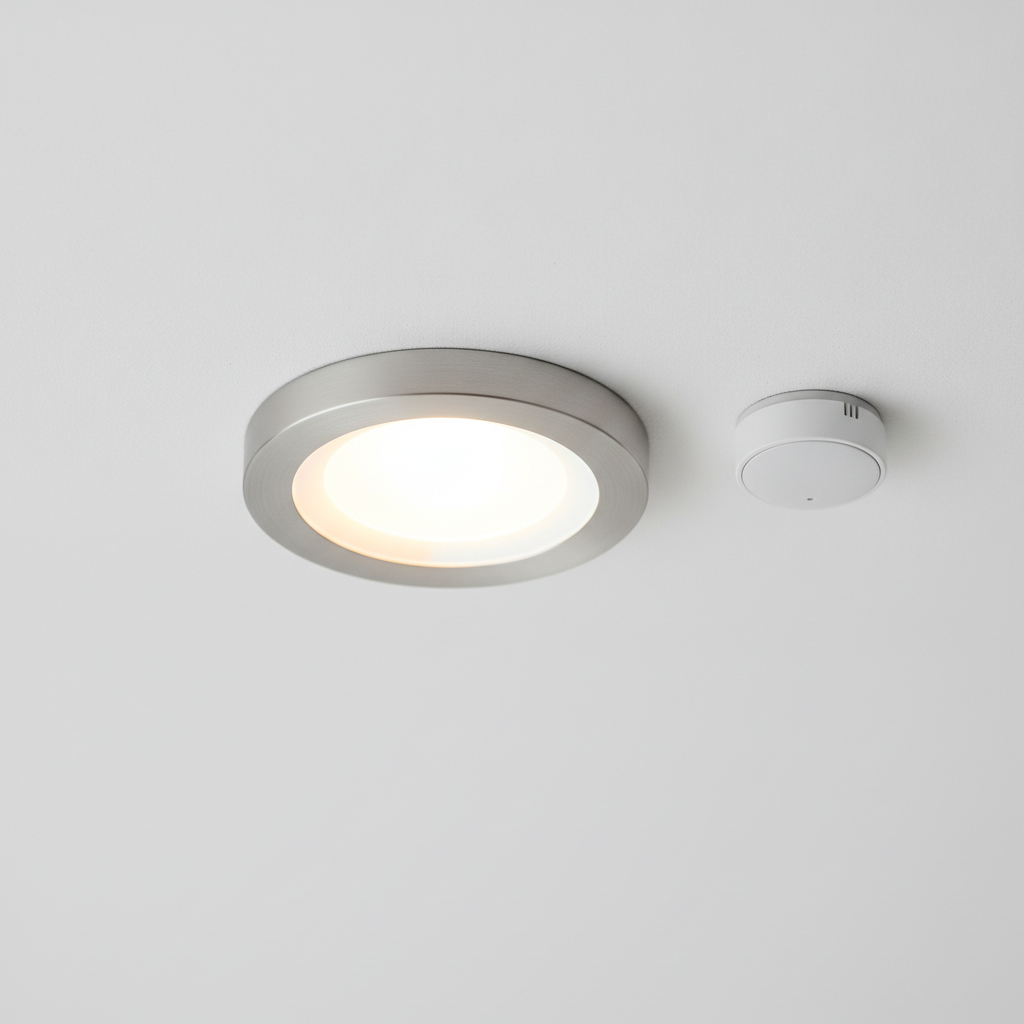
Smart lighting options include bulbs, smart switches and dimmers, scene keypads, LED strips, architectural fixtures, and outdoor/landscape lighting. The right mix depends on room purpose, wiring, and aesthetics. Professional designs layer ambient, task, and accent light for balanced, glare‑free results.
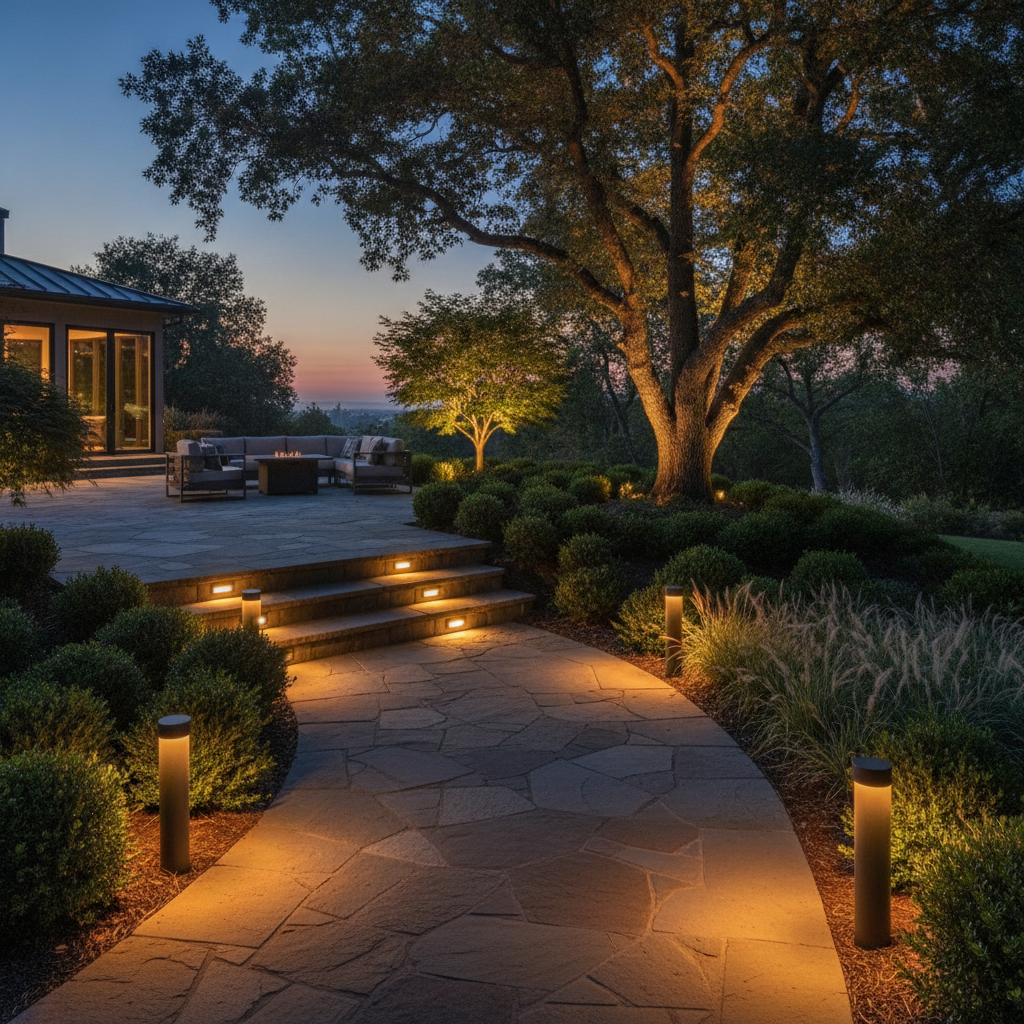
Every room has a job. Kitchens need high lumen output with low glare; living rooms want flexible scenes; bedrooms favor warm evenings that wind down naturally. Outdoors, path, step, and tree uplighting improve safety and curb appeal while minimizing spill and glare using shielded optics and proper aiming.
- Smart bulbs: Quick upgrades for lamps and accent fixtures; excellent for color scenes.
- Smart switches/dimmers: Modernize built-in lights while keeping intuitive physical control.
- Scene keypads: Replace banks of toggles with 3–6 named scenes the whole family can use.
- LED strips: Cove, toe-kick, stair nosing, and backlighting; RGBW for effects, tunable white for daily use.
- Architectural fixtures: Recessed, linear, and wall‑wash for clean layers with low glare.
- Outdoor/landscape: Bollards, step lights, and 12–24V low‑voltage systems for safety and ambiance.
- Shade integration: Coordinate motorized blinds and shades for daylight harvesting and privacy.
We often pair a 4000K “Cook” scene at 80–90% in kitchens with a 2700K “Relax” scene at 30–40% for evenings. That single change shifts the room’s feel dramatically without moving furniture or changing paint color. For inspiration on ceiling layers and feature lighting, browse these lighting features for showrooms and adapt the concepts to residential spaces.
Smart Lighting Design Best Practices
Start with the activities in each space, then layer ambient, task, and accent light. Use sensors and schedules to eliminate waste, and keep control simple with a few named scenes. Ensure robust networking and choose devices that support Matter for long-term flexibility.
Here’s the playbook Brampton clients appreciate because it just works:
- Plan by task: cooking, reading, dining, relaxing—match 3–6 scenes to everyday activities.
- Layering: ambient (recessed/linear), task (pendants/under‑cabinet), accent (strips/sconces).
- Tunable white: 2700–3000K evenings, 3500–4000K daytime, 5000K for short focus bursts.
- Sensors: place occupancy sensors at entries; use 10–20% night‑lights in halls and stairs.
- Glare control: choose fixtures with low UGR optics and 90+ CRI for color quality.
- Outdoor safety: step/path lights at ~10–30 lux; aim tree uplights to avoid light trespass.
- Scenes first: “Welcome,” “Away,” “Relax,” and “Clean Up” cover 80% of needs.
- Keep it local: store automations on the hub so internet outages don’t matter.
- Label clearly: engrave keypads or use intuitive icons for family‑friendly control.
Network is the backbone. A separate IoT SSID, Wi‑Fi 6 access points, and wired backhaul prevent congestion. With good RF planning, even large homes keep latency below ~200 ms, and scenes feel instantaneous everywhere. When in doubt, schedule a lighting design consult and we’ll map out layers and control points room by room.
Local considerations for Brampton
- Winters get dark early, so schedule warm 2700–3000K scenes to activate before sunset for comfort and visibility.
- Snow and rain demand outdoor fixtures with IP-rated housings and sealed connectors to prevent corrosion.
- Power blips happen; choose hubs that maintain local scenes so entries and stairways always respond.
Tools, Platforms, and Integration
Choose a control platform that unifies lighting, shades, and security with local scenes, voice support, and Matter compatibility. Pair it with reliable Wi‑Fi 6, PoE where useful, and clear control points like touch panels and keypads for effortless daily use.
Great tools fade into the background. We prioritize platforms that support voice assistants, have robust apps, and expose scenes to wall‑mounted control displays. Matter support means mixed‑brand devices can interoperate and stay flexible as your needs change across the years.
- Voice assistants & hubs: hands‑free scene calls and quick status checks unify control.
- Control displays: one wall‑mounted panel can simplify an entire floor’s lighting.
- Matter integration: future‑proofs device choice across brands and ecosystems.
- Networking: VLANs and QoS protect lighting traffic from streaming and gaming spikes.
- Security: strong passwords and automatic updates safeguard the home.
If you’re planning to integrate lighting with comfort and security, our teams routinely combine smart climate control, smart sensors, and motorized shades under one interface. That’s the unified experience SmartAura is known for.
Switches vs Bulbs vs Strips vs Fixtures
Bulbs are fast for lamps; switches and dimmers modernize built‑in lights; strips add subtle accents; architectural fixtures deliver polished results. Most homes benefit from a thoughtful mix so control stays intuitive and scenes look balanced.
| Approach | Ideal For | Pros | Considerations | Integrator Tip |
|---|---|---|---|---|
| Smart bulbs | Lamps, accent fixtures | Quick to deploy; vivid color scenes | Wall switch must stay on | Pair with smart plugs for lamps |
| Smart switches/dimmers | Ceiling lights, multi‑fixture circuits | Physical control remains | Requires compatible wiring | Use scene keypads where banks grow |
| LED strips | Coves, toe‑kicks, backlights | Great for accents and night paths | Needs proper power/controls | Specify high‑CRI tunable‑white |
| Architectural fixtures | Ambient/task layers | Low glare, polished finish | Design and install effort | Mix beam angles for balance |
| Outdoor/landscape | Paths, steps, trees | Safety and curb appeal | Weatherproofing and aiming | Use 12–24V low‑voltage systems |
When choosing among these options, remember: the best solution fits your wiring reality, daily habits, and design goals. For more on how pros balance ceiling layers, see these ceiling lighting ideas and adapt the strategies for home environments.
Step-by-Step: Implementing Smart Light Solutions with SmartAura
The fastest, most reliable path is guided: discovery, engineered design, white‑glove installation, configuration and testing, training, and lifetime support. This ensures scenes feel natural from day one and keep working beautifully for years.
- Discovery: a free in‑home consultation maps routines, rooms, and goals. We note daylight patterns and fixture constraints.
- Engineered design: we specify fixtures, optics, controls, and wiring with photometric intent and a room‑by‑room scene plan.
- White‑glove installation: certified technicians handle wiring, labeling, and device setup—clean, courteous, and coordinated.
- Configuration: we program scenes (Welcome, Cook, Relax, Goodnight), tune sensor timeouts, and verify sub‑200 ms response.
- Handover: we train the household, document every circuit and keypad, and share quick‑reference cards.
- Lifetime support: 24/7 priority assistance keeps systems dependable as your needs evolve.
Most projects land with 4–8 named scenes per main area and 10–30% daylight trimming in bright rooms. The result is effortless comfort you notice the first evening. If you’re ready to start, explore our smart lighting service and book your visit.
Mini Case Studies: Brampton and Beyond
These short examples show how smart lighting solves real problems. Each project layered ambient, task, and accent light, added sensors where appropriate, and used simple scenes for daily life. The common thread: intuitive control and reliable performance.
Family home in Brampton
- Challenge: dark winter evenings, kids leaving lights on, cluttered wall switches at main entry.
- Solution: a scene keypad with four modes, hallway night‑lights at 15%, tunable white in living/kitchen.
- Outcome: fewer stray lights, calmer spaces, and clear stair visibility after sunset.
Renovated condo (GTA)
- Challenge: limited wiring and mixed‑brand devices from a prior DIY attempt.
- Solution: Matter‑capable hub, smart dimmers at key circuits, LED strips for cove and media wall.
- Outcome: unified scenes despite a mixed device set; smooth dimming with ~150 ms response.
Backyard and entry upgrade
- Challenge: trip hazards on steps and a dark driveway after late arrivals.
- Solution: step/path lights at ~10–20 lux, motion triggers at entries, dusk‑to‑dawn scheduling.
- Outcome: safer arrivals, better curb presence, and no manual switch hunting.
Thinking about a lighting refresh? Our team can walk through your home in Brampton, map real routines, and design scenes that match how you live. You get engineered plans, white‑glove installation, and lifetime, 24/7 priority support.
Explore more about who we are on our About SmartAura page, or pair lighting with smart sensors and smart climate control for a complete experience.
Smart Lighting FAQ
Here are direct answers to common smart lighting questions—compatibility, reliability, sensors, and privacy—so you can decide with confidence. If you’re unsure where to start, use the step‑by‑step section above or book a consultation.
Will smart switches work with my existing fixtures?
In most cases, yes. Many smart dimmers support common LED loads and handle single‑pole or three‑way wiring. For best results, match dimmer type to the driver and use neutral‑wire models when available to improve dimming stability and flicker performance.
Do I need a hub, or can I just use Wi‑Fi bulbs?
Wi‑Fi bulbs work for quick wins, but hubs enable local scenes, lower latency, and better reliability—especially across many rooms. Hubs that support Thread or Zigbee build resilient meshes and keep commands working even when the internet is down.
How do sensors save energy without being annoying?
Place occupancy sensors near entries, set short grace periods in low‑traffic rooms, and use partial‑on (like 70%) to balance comfort and savings. Add daylight sensors so bright rooms auto‑dim by 10–40% instead of staying at full power.
Is smart lighting secure and private?
Choose platforms with local control, unique strong passwords, and auto‑updates. Segment IoT devices on their own network and enable multi‑factor authentication for remote access. This keeps control responsive and protects your household from common threats.
Wrap-Up: Bring Light to Life
Smart light solutions combine LEDs, smart controls, and thoughtful design to create comfort on autopilot. Start with a few scenes, add sensors where they help, and let a unified platform tie it together. The result is brighter rooms, lower energy use, and simpler living.
- Key takeaways:
- Layer ambient, task, and accent; name 4–8 everyday scenes that match routines.
- Use tunable white (2700–5000K) with daylight and occupancy sensing to cut waste.
- Favor local control and solid networking for sub‑200 ms responsiveness.
- Coordinate lighting with motorized shades to harvest daylight.
Ready to see this in your own space? Book a discovery visit in Brampton—our team will engineer a plan you can live with every day: simple, reliable, and beautifully lit.